|
|

They shall grow not old, as we that are left grow old

|
|
The Lake Superior Scottish Regiment
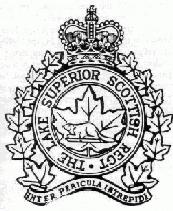
Armorial Description
A maple leaf charged with a beaver, encircled by an annulus, inscribed THE LAKE
SUPERIOR SCOTTISH REGIMENT and surmounted by the Crown; below a scroll
inscribed INTER PERICULA INTREPIDI; on each side of the annulus, six maple
leaves.
Official Abbreviation: Lake Sup Scot R
Motto: Inter Pericula Intrepidi (Fearless in the face of danger)
Battle Honours (34)
First World War
YPRES, 1915
YPRES, 1917
PASSCHENDAELE
Fustubert, 1915
AMIENS
MOUNT SORREL
Scarpe, 1918
SOMME, 1916
Drocourt-Queant
Flers-Courcelette
HINDENBURG LINE
Ancre Heights
Canal du Nord
Arras, 1917
Arras, 1918
CAMBRAI, 1918
VIMY, 1917
VALENCIENNES
HILL 70
France and Flanders, 1915-1918
Second World War
FALAISE
THE HOCHWALD
Falaise Road
Veen
The Laison
TWENTE CANAL
Chambois
FRIESOYTHE
THE SCHELDT
KUSTEN CANAL
THE LOWER MAAS
Bad Zwischenahn
THE RHINELAND
NORTH-WEST EUROPE, 1944-1945
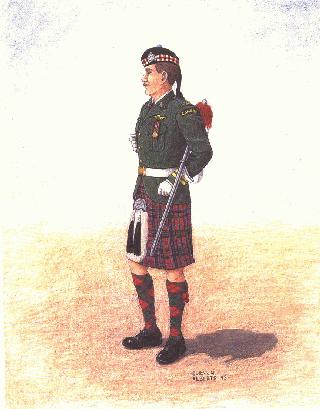
Tartan: MacGillivary
Authorized March: The Highland Laddie
Regimental Headquarters:
The Armoury
317 Park Ave.
Thunder Bay, Ontario
P7B 1C7
Honourary Colonel: Colonel P.R. "Jerry" Cook,OStJ,CD
Honourary Lieutenant-Colonel: Lieutenant-Colonel Catherine Paterson,DStJ,DStL
Commanding Officer: Major Donald P.M. Strang,CD
Regimental Sergeant-Major: Master Warrant Officer David J. Coffey,CD
The Lake Superior Scottish Regiment perpetuates the following Regiments:
The Provisional Battalion of Rifles
96th District of Algoma Battalion of Rifles
96th Algoma Rifles
96th The Lake Superior Regiment
52nd, 94th and 141st Battaions, CEF
The Lake Superior Regiment (Motor)
Brief History
The Regiment was raised 30 Apr 1885 and designated
The Provisional Battalion of Rifles at Port Arthur, Ontario. It was
redesignated the 96th District of Algoma Battalion of Rifles 29 Apr 1887.
On 3 Jul 1904 is was renamed the 96th Lake Superior Regiment and
redesignated The Lake Superior Regiment 15 Mar 1920. 26 Jan 1943 it became
The Lake Superior Regiment (Motor) and on 29 Jun 1949 it was granted
approval to become "Scottish", being called The Lake Superior Scottish
Regiment (Motor), and 11 Apr 1958 it adopted its present title, The Lake
Superior Scottish Regiment. During World War I it sent drafts of over 400
soldiers each to the 8th and 28th Battalions, CEF, raised the 52nd, 94th,
and 141st Battalions, the latter two being reinforcement Battalions for
"The Fighting 52nd".
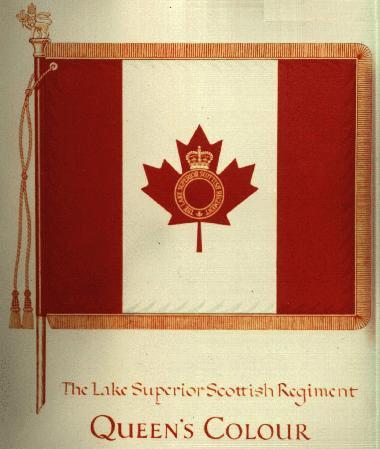
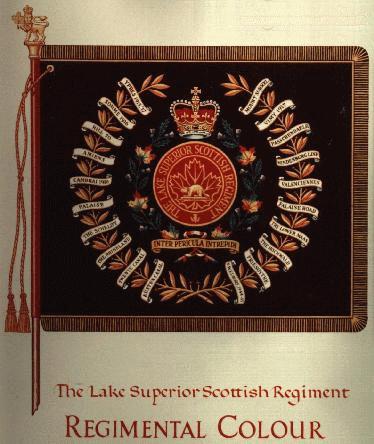
The LSSR's Colours
Order of Precedence: 33
Options:
Go back to the Infantry Regiments page.
Go back to the Army home page.
|
|
|
| |
February 26
1852: The troopship HMS Birkenhead was en route to Cape Town when it hit an uncharted rock during the night, about 3 miles off the South African shore, near Danger Point. The ship is believed to have had 638 passengers and crew aboard including 476 soldiers from a number of different regiments of the British Army, on their way to reinforce the garrison in the Cape Colony, but also 7 women and 13 children. The rock tore open the hull, and about 100 soldiers asleep below were drowned drowned immediately. Everyone else mustered on deck, where it was clear the ship was sinking quickly. Only three lifeboats could be used; all the women and children were placed in these, with a few crew to man them. The senior army officer aboard, Lieutenant Colonel Seton of the 74th Foot, drew the soldiers up on parade on the deck, and emphasised the need for absolute discipline if the lifeboats were not to be swamped. Some cavalry horses aboard were freed and driven into the sea in the hope that they might be able to swim themselves ashore. The soldiers stood firm, even as a mast crashed down around them and the ship split in two. She sank in less than 25 minutes. Only 193 people survived the ordeal - although the weather was excellent, sharks claimed many of the men in the water, as well as most of the horses. The tradition of "Women and children first" is popularly ascribed to have its roots in this incident.
1903: The Kano-Sokoto expedition was mounted to extend British rule thoughout the northern territories of Nigeria, and in particular to suppress the slave trade. On 26 February, a small party of 45 locally recruited soldiers from the Northern Nigerian Regiment, commanded by Lieutenant Wright, were attacked by no less than 3,000 tribesmen, including 1,000 cavalry. For two hours, the soldiers beat back repeated attacks, until eventually the tribesmen started to withdraw in good order. Lieutenant Wright then led his men forward in a charge, and succeeded in turning the withdrawal into a rout. He was awarded the Victoria Cross.
1916: During the continuing efforts of the Franco-British naval force at the Dardanelles to destroy the Turkish coastal defences, a small party of seamen was landed under the command of Lieutenant Commander Robinson, to demolish a battery at Kum Kale. They were met with heavy fire, and Robinson feared that the men's white uniforms made them too easy a target. He therefore ordered them to remain under cover, and went forward alone. Despite the enemy fire, he succeeded in reaching a gun whose crew had fled, and laid a demolition charge. That gun destroyed, he returned to his men, collected a further supply of explosives, and returned alone to destroy a second position. He subsequently played a leading role in four operations to clear minefields in the straits, and was awarded the Victoria Cross.
1942: Although the Scharnhorst, Gneisenau and Prinz Eugen had succeeded in escaping from Brest to Germany in the Channel Dash, they remained priority targets. Gneisenau was spotted by reconnaissance aircraft in drydock in Kiel, undergoing repairs to the damage inflicted by a mine during the dash. 49 Bomber Command Wellington, Hampden and Halifax aircraft attacked, and a direct hit was scored on the battlecruiser, in the bows, killing 116 crew and causing such severe damage that she never returned to service. Three bombers failed to return.
1945: THE HOCHWALD, efective dates for battle honour begin (to 4 Mar 45)
1945: VC won by Sgt Aubrey Cosens, The Queens Own Rifles of Canada, Mooshof, Germany (posthumous)
1971: Ottawa Ontario - Ottawa starts program to raise Francophone numbers in the Canadian Armed Forces to at least 28%.
» Download the iPhone/iPad Military History app! «
|
|